TanStack npm Supply-Chain Attack 2026 — Incident Report
Executive Summary
On May 11, 2026, attackers compromised TanStack Router/Start release flow and published 84 malicious versions across 42 packages. Public reporting indicates rapid detection, staged deprecation, and an all-clear by May 15, 2026.
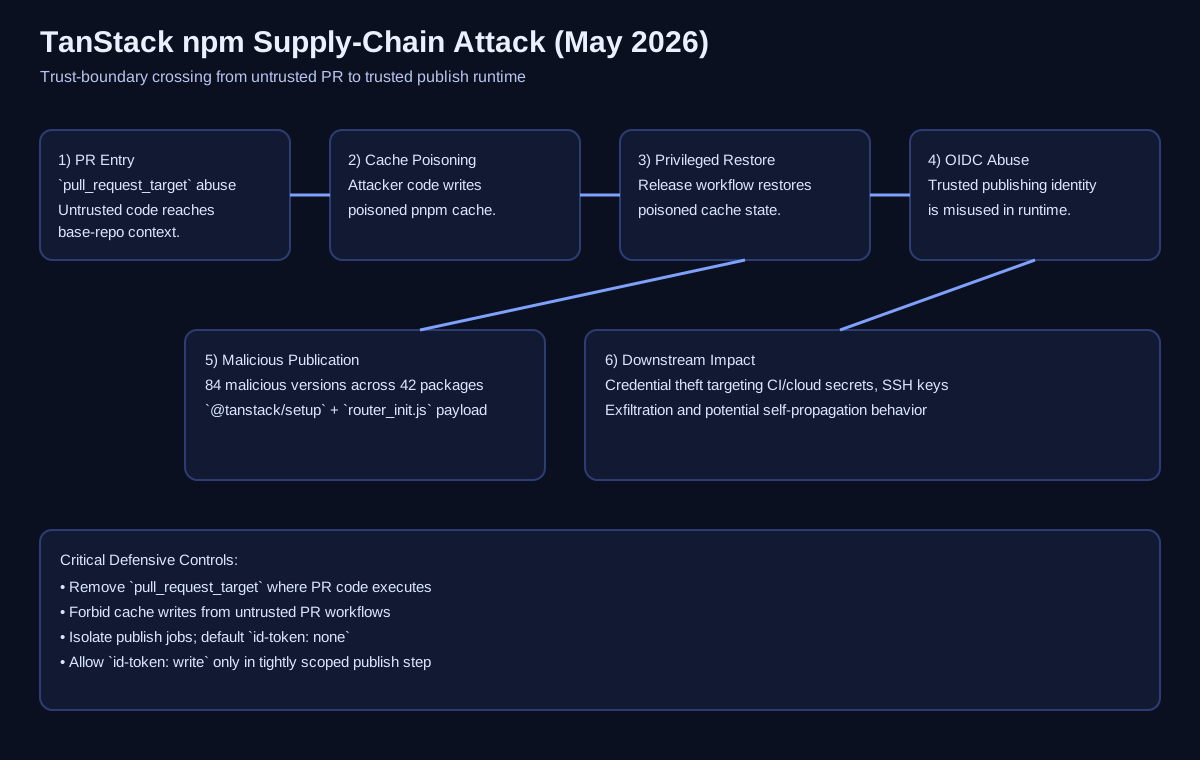
This was not a simple npm-token theft scenario. The attack chain crossed CI trust boundaries:
pull_request_targetworkflow abuse- GitHub Actions cache poisoning
- OIDC token/runtime identity misuse
- npm trusted-publishing abuse
- Malicious release publication with valid-looking provenance
What Happened
A malicious PR from a disguised fork triggered pull_request_target workflows in base-repository context. Attacker-controlled execution poisoned the pnpm cache. Later, a legitimate release workflow restored that cache, executed malicious logic in privileged context, and enabled malicious package publishing.
Scope and Affected Area
| Area | Status |
|---|---|
| Affected repo family | Router/Start |
| Affected namespace | @tanstack/* (Router/Start-related) |
| Affected packages | 42 |
| Affected versions | 84 |
| Current package state | TanStack declared current publishes safe on May 15, 2026 |
Timeline (UTC)
| Time | Event |
|---|---|
| May 10 17:16 | Renamed attacker fork created |
| May 10 23:29 | Malicious commit added with [skip ci] |
| May 11 ~10:49 | PR opened against TanStack/router |
| May 11 10:49–11:11 | pull_request_target execution window |
| May 11 11:29 | Poisoned cache saved |
| May 11 19:15–19:16 | Release workflow restores poisoned cache |
| May 11 19:20 / 19:26 | Two malicious publish batches |
| May 11 19:46 | External public disclosure |
| May 11 20:19–21:03 | TanStack deprecates affected versions |
| May 15 | TanStack all-clear and hardening follow-up |
Malware Behavior
Malicious versions added:
"optionalDependencies": {
  "@tanstack/setup": "github:tanstack/router#79ac49eedf774dd4b0cfa308722bc463cfe5885c"
}
Install flow resolved and executed obfuscated payloads (router_init.js), targeting credentials/secrets from CI and cloud contexts, with reported exfiltration and potential self-propagation behavior.
Key IOCs
@tanstack/setup79ac49eedf774dd4b0cfa308722bc463cfe5885crouter_init.js(~2.3 MB)Linux-pnpm-store-6f9233a50def742c09fde54f56553d6b449a535adf87d4083690539f49ae4da11filev2.getsession.org,seed1.getsession.org,seed2.getsession.org,seed3.getsession.orglitter.catbox.moe
Root Cause Analysis
| Layer | Failure |
|---|---|
| Trigger model | Unsafe privilege with pull_request_target |
| Cache boundary | Untrusted workflow poisoned trusted cache |
| Release isolation | Privileged job consumed untrusted cache |
| Trusted publishing | Runtime path allowed publish-capable identity misuse |
| Monitoring | External detection preceded internal detection |
Immediate Remediation Checklist
- Treat hosts/runners that installed affected versions on May 11, 2026 as compromised.
- Hunt lockfiles, caches, and artifacts for known IOCs.
- Rotate all reachable credentials (GitHub, npm, cloud, Vault, SSH, CI secrets, signing assets).
- Purge CI/package caches and rebuild from clean runners.
- Block and monitor known exfiltration domains.
Engineering Hardening Recommendations
- Remove
pull_request_targetwhere PR code can execute. - Disable cache writes from untrusted PR contexts.
- Pin Actions by immutable commit SHA.
- Isolate publish job from cache-restore and untrusted artifacts.
- Default workflow permissions to:
permissions:
  contents: read
  id-token: none
Publish-only exception:
permissions:
  contents: read
  id-token: write
- Use install hardening where possible:
npm ci --ignore-scripts
pnpm install --ignore-scripts --frozen-lockfile
yarn install --ignore-scripts --immutable
References
- https://tanstack.com/blog/npm-supply-chain-compromise-postmortem
- https://tanstack.com/blog/incident-followup
- https://digital.nhs.uk/cyber-alerts/2026/cc-4781
- https://www.aikido.dev/blog/mini-shai-hulud-is-back-tanstack-compromised
- https://socket.dev/blog/tanstack-npm-packages-compromised-mini-shai-hulud-supply-chain-attack
- https://openai.com/index/our-response-to-the-tanstack-npm-supply-chain-attack/